Digital marketing has become an important part of business growth. Whether you run a startup, retail store, real estate company, or service-based business, having a strong online presence helps you reach potential customers.
However, many small businesses invest in digital marketing without getting the expected results. Low website traffic, fewer enquiries, poor social media engagement, and wasted advertising budgets are common challenges.
In many cases, the problem isn't the marketing budget but the mistakes made while planning and executing marketing activities.
Let's explore some common digital marketing mistakes small businesses make and understand how they affect business growth.
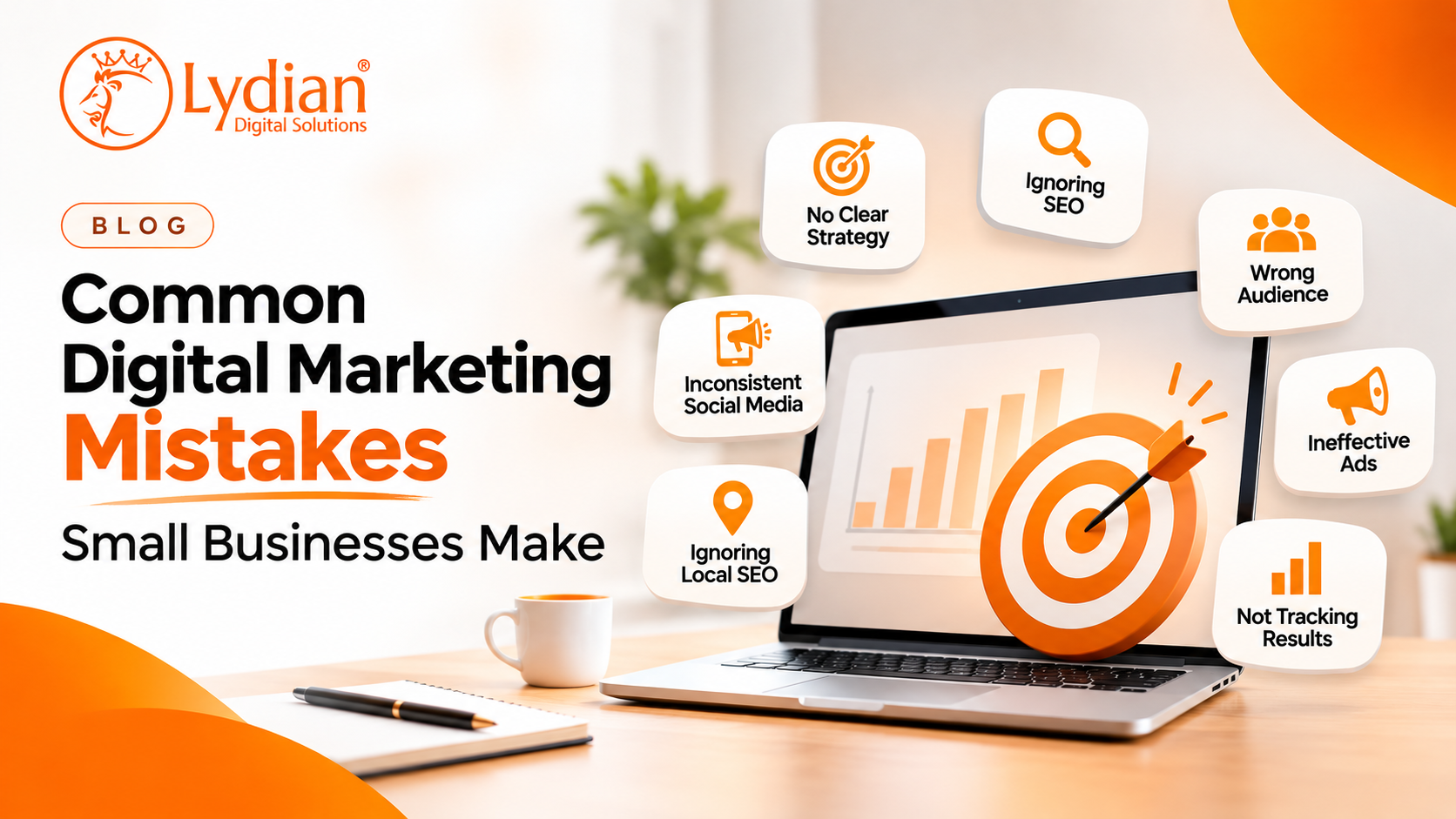
1. Marketing Without a Clear Strategy
Many businesses start posting on social media or running advertisements without setting specific goals.
Without a proper marketing strategy, businesses often struggle to identify their target audience, choose the right platforms, and measure results.
A clear digital marketing plan helps connect marketing activities with business objectives.
2. Ignoring Search Engine Optimization (SEO)
Having a website doesn't guarantee visibility on Google.
Without proper keyword research, optimized website content, and technical SEO, potential customers may struggle to find your business online.
SEO for small businesses plays an important role in improving organic search visibility and attracting people actively looking for relevant products or services.
3. Inconsistent Social Media Marketing
Creating a social media account is easy, but maintaining an effective online presence requires consistency.
Many businesses publish promotional posts without sharing useful information, industry updates, customer experiences, or engaging content.
This can make it difficult to build audience interest and customer trust.
4. Spending Money on Ads Without a Proper Plan
Google Ads and Meta Ads can generate enquiries, but poorly planned campaigns can waste advertising budgets.
Common problems include incorrect audience targeting, unclear ad creatives, unsuitable campaign objectives, and ineffective landing pages.
Without proper conversion tracking, businesses may also struggle to understand whether their advertisements are generating valuable leads.
5. Having a Website That Doesn't Generate Leads
A professional-looking website should do more than display business information.
Slow loading speed, confusing navigation, outdated content, and missing contact details can affect the visitor experience.
A website that isn't designed around customer needs may receive traffic without generating meaningful enquiries.
6. Ignoring Local SEO and Google Business Profile
Local businesses often depend on customers searching for nearby products and services.
An incomplete or outdated Google Business Profile can affect how customers discover and evaluate a business.
Accurate business information, relevant categories, genuine photographs, and customer reviews are important parts of a strong local SEO presence.
7. Targeting the Wrong Audience
Reaching thousands of people doesn't necessarily mean reaching potential customers.
Businesses sometimes run advertisements or publish content without understanding their ideal audience.
This can result in low-quality enquiries, poor engagement, and marketing expenses that don't support business objectives.
8. Not Tracking Marketing Performance
Likes, followers, impressions, and website visits don't always translate into sales.
Without monitoring important metrics such as qualified leads, conversion rates, website traffic, and cost per lead, businesses may find it difficult to evaluate their marketing performance.
Tools like Google Analytics 4 and Google Search Console provide useful insights into website and search performance.
9. Ignoring Customer Reviews and Online Reputation
Before contacting a business, many customers check online ratings, reviews, and testimonials.
Ignoring customer feedback or leaving negative reviews unanswered can affect how potential customers perceive your company.
Your online reputation is an important part of building trust and credibility.
10. Expecting Immediate Results
Digital marketing is an ongoing process, not an overnight solution.
SEO requires time to build organic visibility, social media needs consistent engagement, and paid campaigns require testing and optimization.
Unrealistic expectations can lead businesses to stop marketing activities before they have enough information to evaluate their performance.
Frequently Asked Questions (FAQs)
1. What are the most common digital marketing mistakes small businesses make?
The most common mistakes include ignoring SEO, inconsistent social media marketing, poor audience targeting, ineffective paid advertising, and not tracking campaign performance.
2. Why is digital marketing important for small businesses?
Digital marketing helps small businesses improve online visibility, reach potential customers, build brand awareness, generate enquiries, and compete in their industry.
3. Why are my digital marketing campaigns not generating leads?
Poor audience targeting, ineffective advertisements, weak landing pages, unclear messaging, and missing conversion tracking can affect lead generation.
4. Is SEO necessary for small businesses?
Yes. SEO helps businesses improve their visibility on search engines and connect with customers searching for relevant products and services.
5. Which digital marketing channels are best for small businesses?
SEO, Google Business Profile, social media marketing, Google Ads, and Meta Ads can all be useful. The right combination depends on your business, audience, and marketing objectives.
Conclusion
Digital marketing offers small businesses several opportunities to connect with customers and build a stronger online presence. However, common mistakes such as poor planning, ignoring SEO, inconsistent content, and ineffective advertising can limit results.
Understanding these challenges is the first step towards making better marketing decisions.